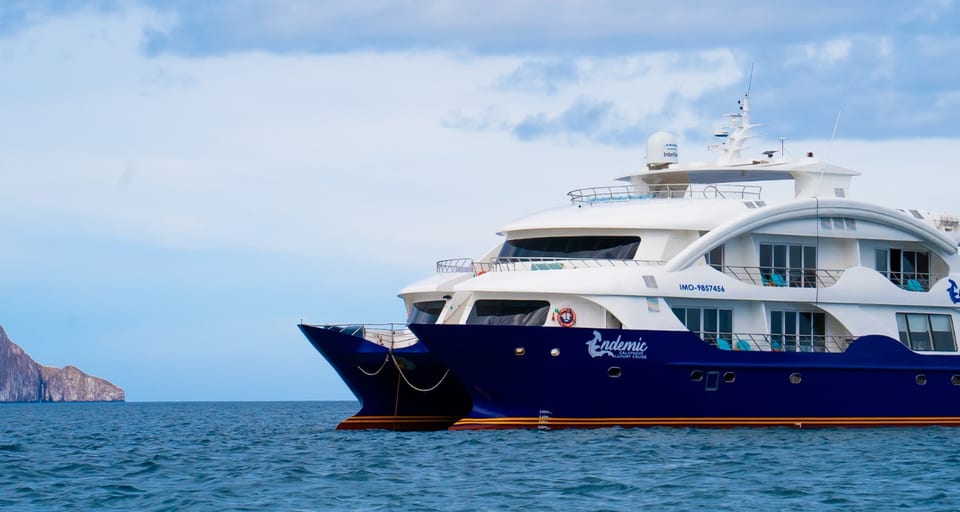
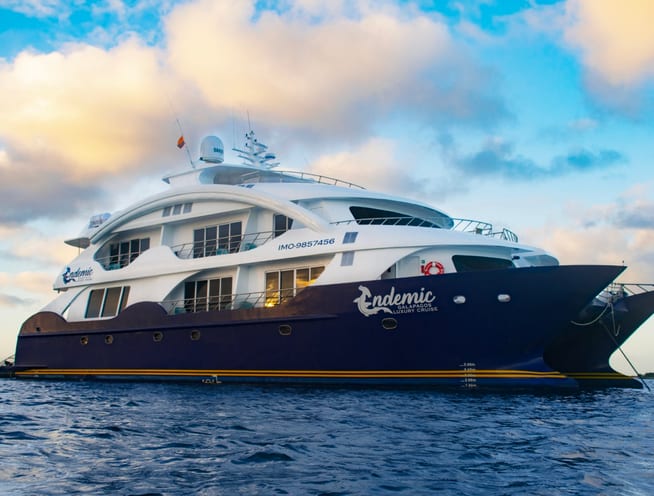

The blue-and-white Endemic catamaran at anchor on open sea, with Kicker Rock rising from the water behind

Wall of Tears Western Explorer

Trip highlights:

  • Elizabeth Bay
  • Fernandina
  • Genovesa
  • Sierra Negra Volcano
  • Flightless cormorants
  • Marine iguanas

From $10,490£7,939 per person

Show the trip's details
Ship
Endemic
Next departure
11 Jul – 18 Jul 2027
Duration:
8 Days
Comfort level:
Luxury
Total guests:
16

Your journey

An eight-day luxury trip for travellers who want the west and the north.

You cross the lava at Sullivan Bay and hike Sierra Negra Volcano. Elizabeth Bay, Tagus Cove and Espinoza Point have flightless cormorants, penguins and the largest marine iguana colonies. You also visit Genovesa, kayak at Buccaneer Cove and relax on Bachas Beach. Eight days on Endemic, a luxury catamaran with private balconies.

Map of the Galápagos Islands this trip visits, with each day numbered as in the itinerary Equator Fernandina San Cristóbal Santa Fe Pinzón Marchena

Mainland Ecuador

© OpenStreetMap contributors
  1. 1 Day 1: Santa Cruz Island

    Arrive at Baltra Airport where you will be transferred to the vessel. In the afternoon, visit the beautiful white-sand beach, Las Bachas, located on the northern coast of Santa Cruz Island. There you can go for a stroll or do some easy snorkeling in the gentle surf.

    Santa Cruz, Baltra

  2. 2 Day 2: Explore Genovesa Island

    In the morning, you will visit Darwin Bay, which is the only sandy beach found in the caldera on Genovesa. Colonies of the Great Frigates are found along the beach. In the afternoon, you will go to El Barranco (Prince Philip’s Steps), a carved out of stone stair. This will lead you to a wide plateau, where you can observe large colonies of masked boobies, frigate birds, storm petrels and ducks.

    Genovesa

  3. 3 Day 3: Explore Santa Cruz and Santiago Islands

    In the morning, you will visit the Twin Craters, located in the highlands of Santa Cruz. You will stay in the highlands of Santa Cruz island to see giant tortoises short-eared owls, Darwin’s finches, yellow warblers, Galapagos rails and paint-billed crakes in the wild. In the afternoon, you will visit Sullivan Bay, located on the east coast of Santiago Island. You will land on a white coral sand beach and walk over lava that flowed less than 100 years ago.

    Santa Cruz, Santiago

  4. 4 Day 4: Explore Isabela Island

    In the morning, you will visit the Wetlands, which are a complex of trails of 6km long, located south of Isabela Island. You can also visit the Sierra Negra Volcano, one of largest craters in the archipelago with a diameter of five kilometers. In the afternoon, you will visit the Arnaldo Tupiza Breeding Centre of Isabela, infant and juvenile giant tortoises can be seen until they are ready to be released and survive in the wild. You can also visit the Wall of Tears. This is a man-made monument which was built in the 1940’s by prisoners.

    Isabela

  5. 5 Day 5: Isabela Island - Elizabeth and Urbina Bays

    In the morning, you will discover Elizabeth Bay, which is a marine visitor site. You can spot sea turtles, flightless cormorants, spotted eagle rays, golden rays, brown pelicans and sea lions on this excursion. In the afternoon, you will visit Urbina Bay to see coral formations, large colored land iguanas, giant turtles, flightless cormorants, blue-footed boobies, penguins and marine iguanas.

    Isabela

  6. 6 Day 6: Isabela and Fernandina Islands

    In the morning, you will visit Tagus Cove which is a ride along the cliffs in a zodiac providing you with a good chance to see the Galapagos penguin, the flightless cormorant and other sea birds. In the afternoon, you will visit Espinoza Point of Fernandina Island. Located within a fascinating lava scenery with Lava-Cactuses, you will also discover sea lions, penguins, the flightless cormorant and one of the biggest iguana colonies of Galápagos.

    Isabela, Fernandina

  7. 7 Day 7: Santiago and Rabida Islands

    In the morning, you will have the opportunity to discover the Buccaneer Cove or Espumilla Beach of Santiago Island. Buccaneer Cove is a nice place for a zodiac ride, snorkeling and kayaking and Espumilla Beach is a popular place for observing an abundance of marine life. In the afternoon, you will visit the red sand beach of Rabida Island, famous for its cactus groves and rock formation scenery. You will see brown pelicans’ nests, and a lagoon where flamingos reside.

    Santiago, Rabida

  8. 8 Day 8: Mosquera Islet

    In the morning, you will visit Mosquera, a small islet found between Baltra & North Seymour Islands. Lava gulls, sea lions, Sally light foot crabs inhabit this sand bank with an extension of over 600 meters. After the last visit, you will be transferred to Baltra airport for your return flight to mainland Ecuador.

    Baltra, North Seymour, Mosquera

What's included...

  • Unlimited coffee, tea, and filtered water available throughout the cruise
  • Daily briefings and educational talks by expert naturalist guides
  • Snorkeling opportunities at Bartholomew, Devil’s Crown, Post Office Bay, and Black Turtle Cove
  • Dinghy (panga) rides through diverse marine habitats, spotting rays, turtles, and reef sharks
  • Kayaking at select sites such as Chinese Hat and North Seymour
  • Wildlife encounters with marine iguanas, Galapagos penguins, sea lions, blue-footed boobies, frigatebirds, and more
  • Roundtrip airport transfers in Galapagos (Baltra Airport to cruise ship and back)
  • All guided excursions & activities led by certified Galapagos National Park guides
  • Snorkeling gear (mask, snorkel, and fins) provided onboard
  • Use of kayaks and paddleboards when permitted

Not included...

  • Galapagos National Park entrance fee ($200 per adult, $100 per child (12 and under)
  • Transit Control Card (TCT) – $20 per person
  • Flights to/from Galapagos Islands (Baltra Airport)
  • Alcoholic beverages and soft drinks (available for purchase onboard)
  • Personal expenses, tips, and travel insurance
Comfort level: Luxury

Endemic

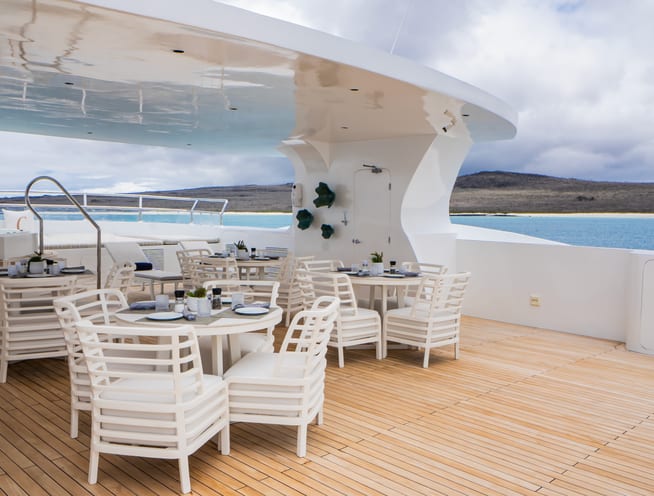
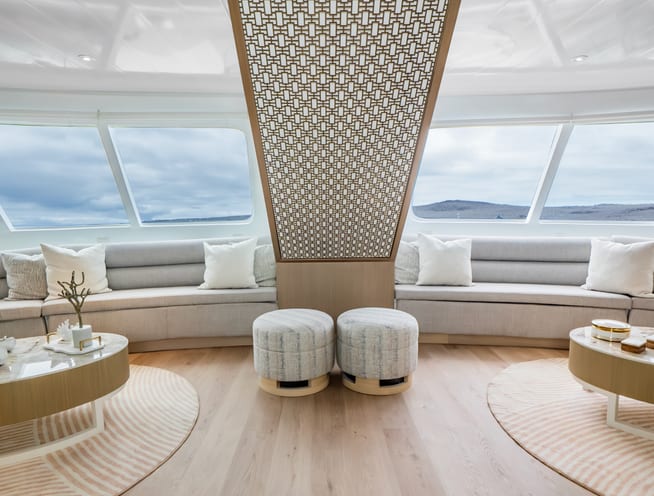
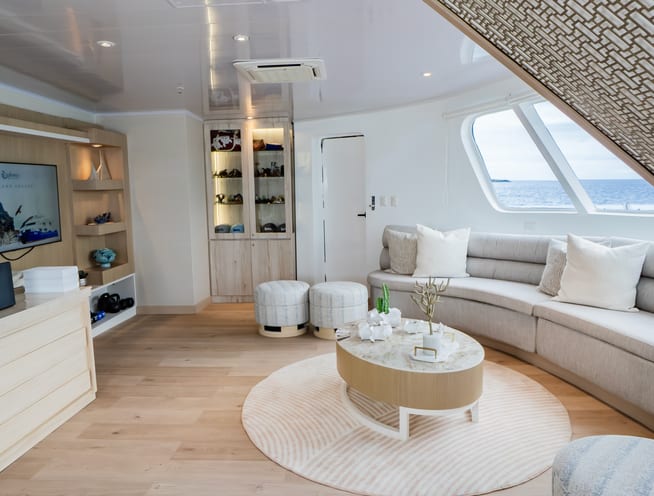
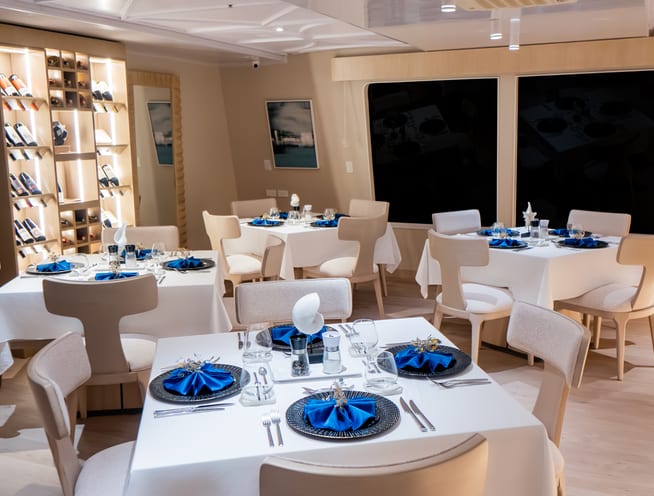
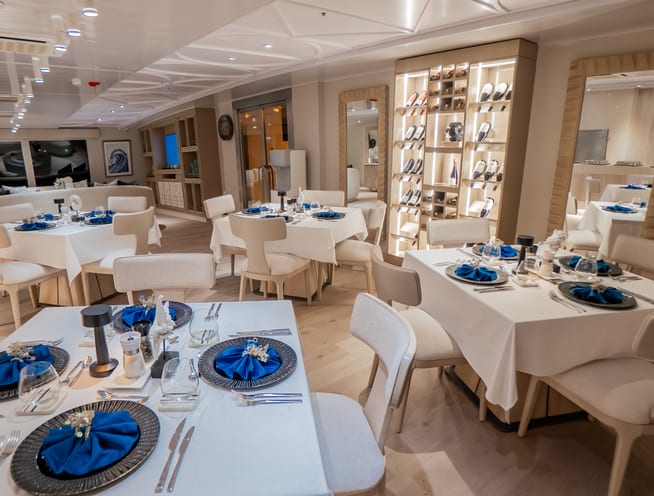
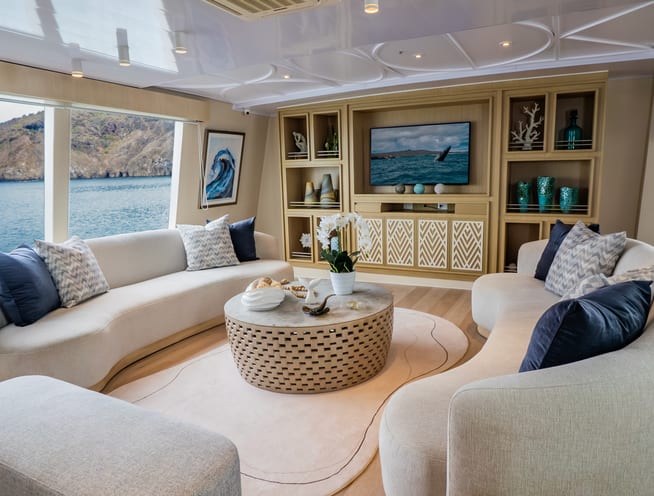
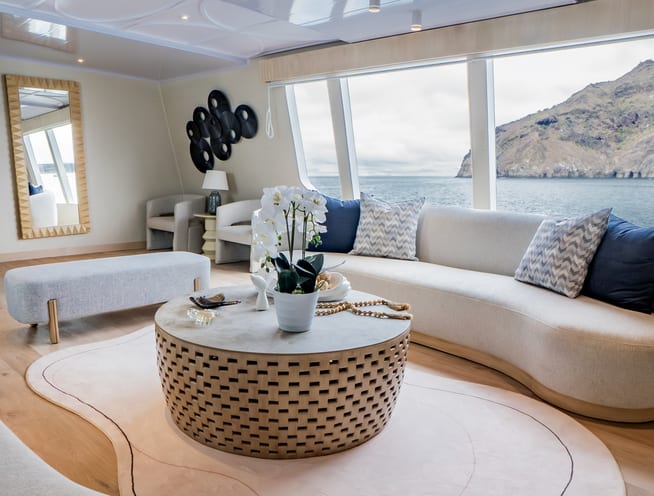
A New Generation of Galapagos Luxury

On board:

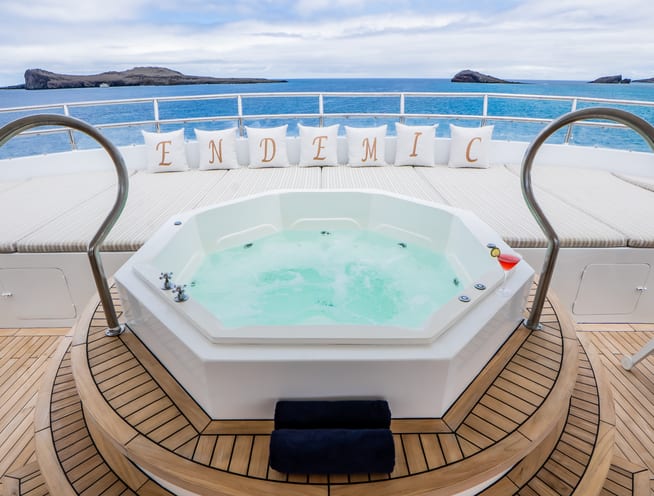
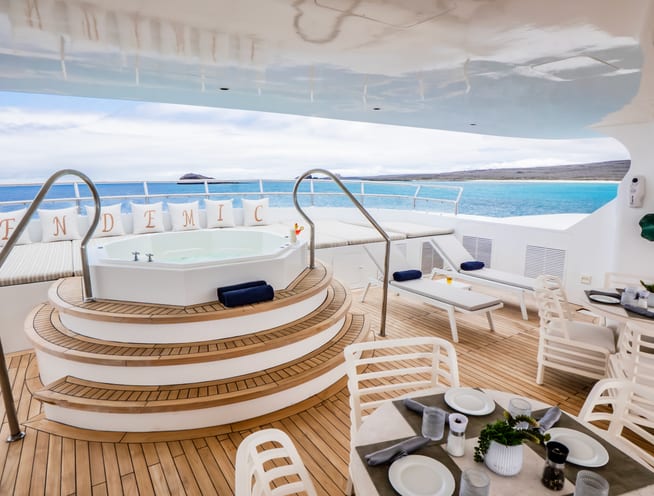
  • Sky deck with luxurious whirlpool
  • Private Balcony Suites
  • Expert Naturalist Guides
  • Sea Kayaks and Paddle-boards
  • Wetsuits
  • Single cabin

Cabins

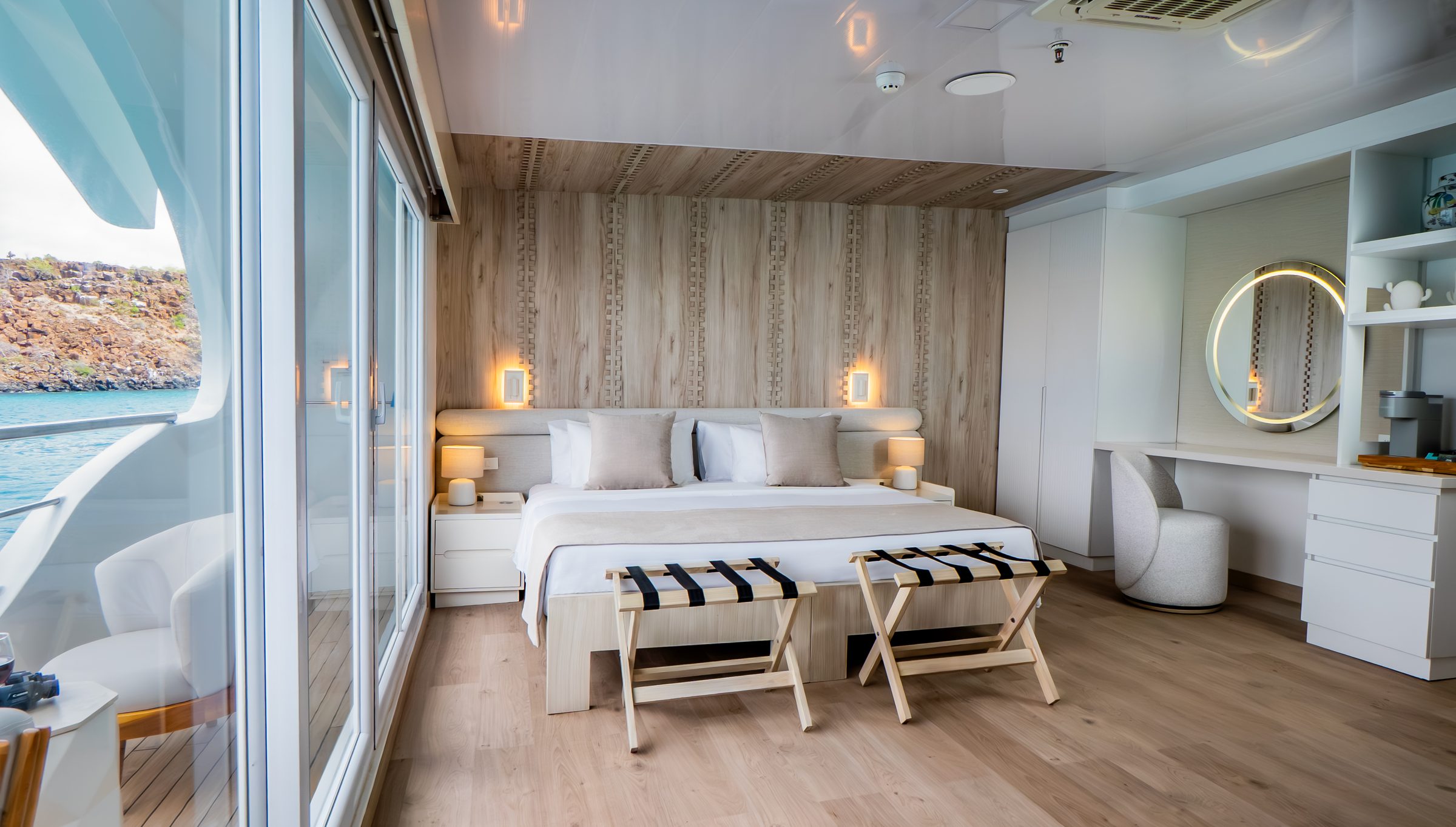
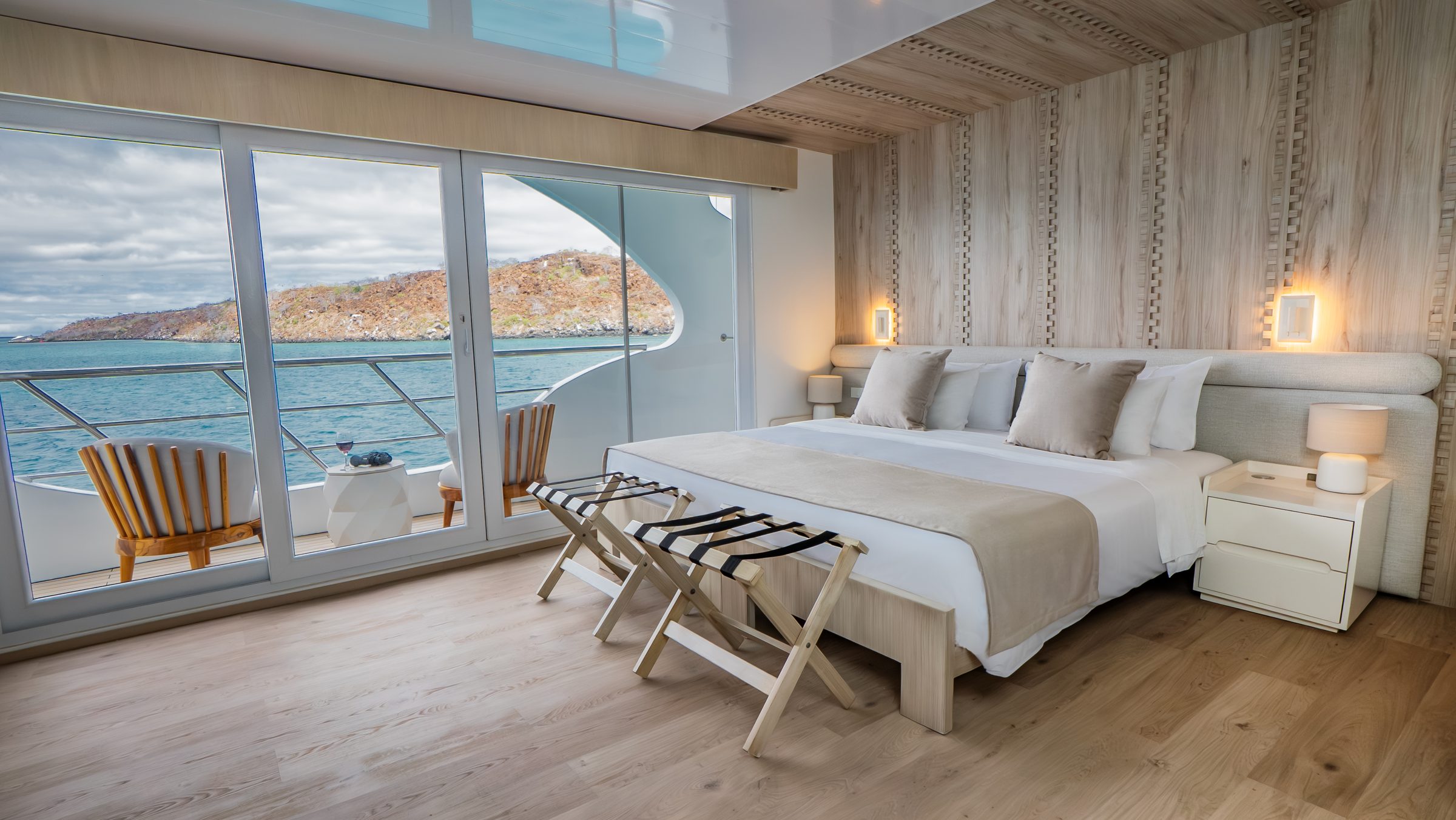
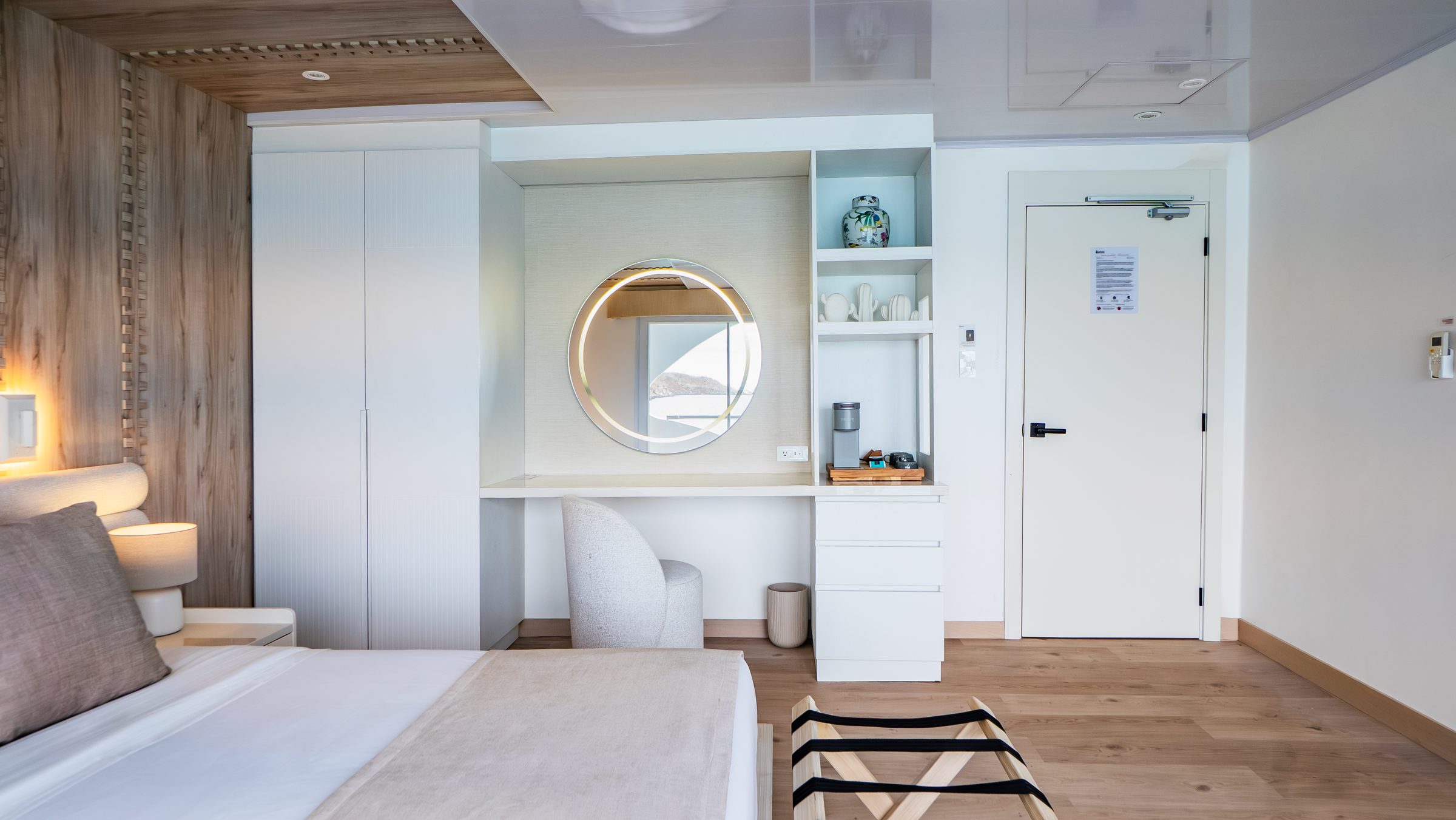
  • A suite with a large bed, a wardrobe, a vanity with an illuminated round mirror and glass doors onto a balcony
  • A suite with a large bed against a wood-panelled wall and glass doors onto a balcony with chairs, facing a rocky island
  • A suite's vanity with an illuminated round mirror, a wardrobe and a coffee machine on the counter, beside the cabin door
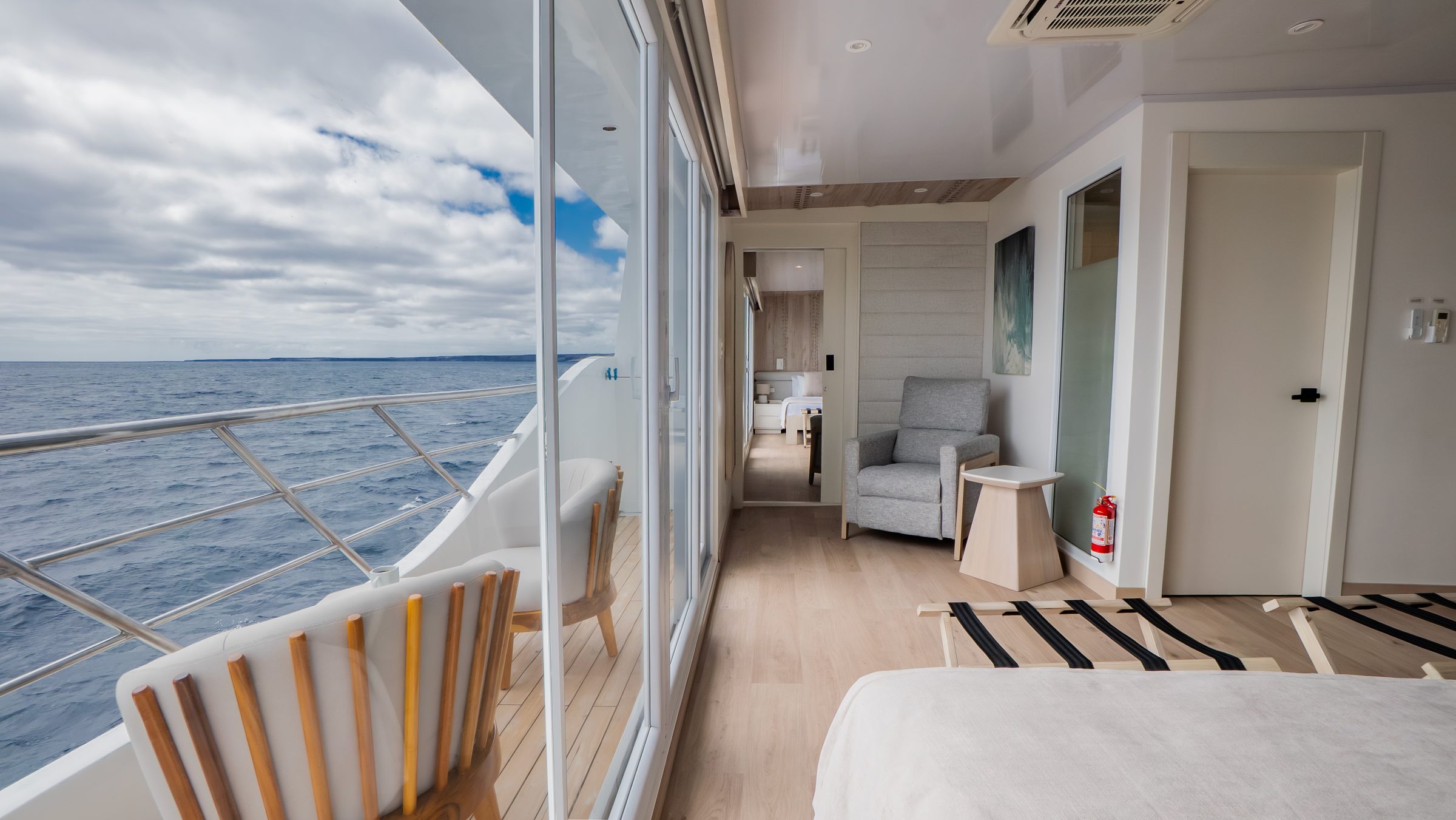
  • A cabin with glass doors along a balcony with chairs over the sea, an armchair and a doorway through to another bedroom
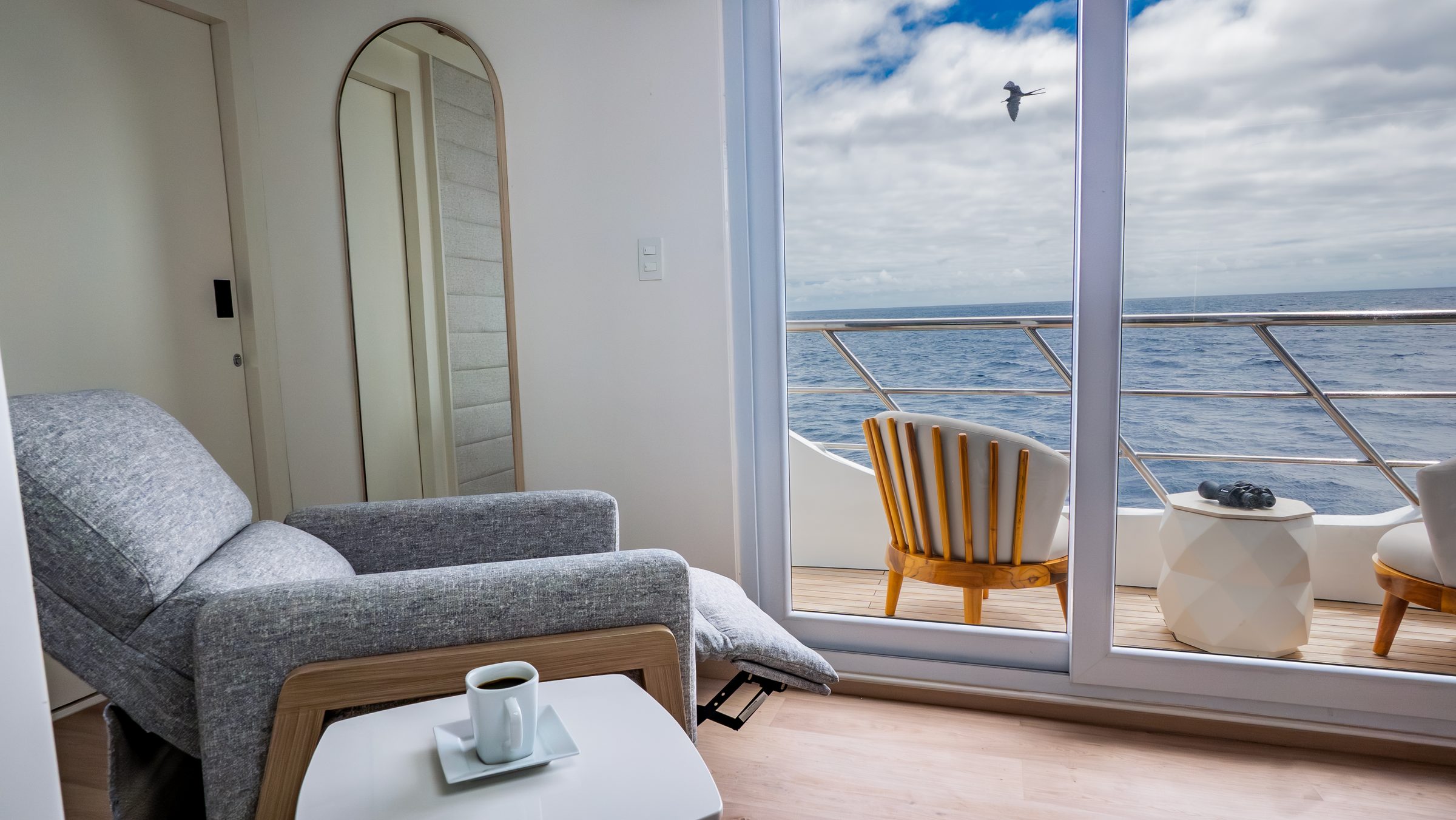
  • A recliner and a coffee cup beside glass doors onto a balcony with chairs, a seabird flying over the sea
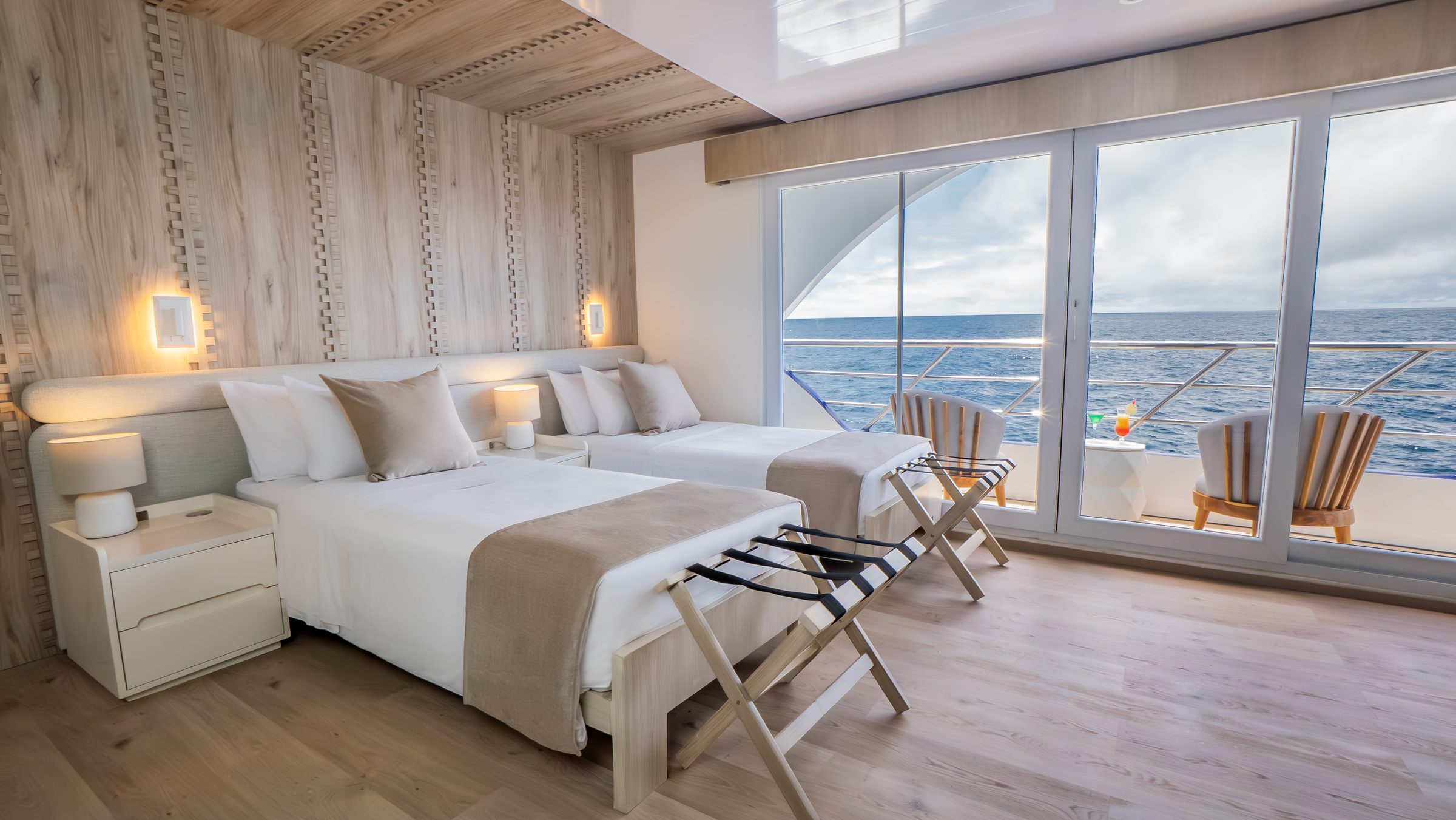
  • A cabin with two double beds, luggage racks and glass doors onto a balcony with two chairs over the open sea
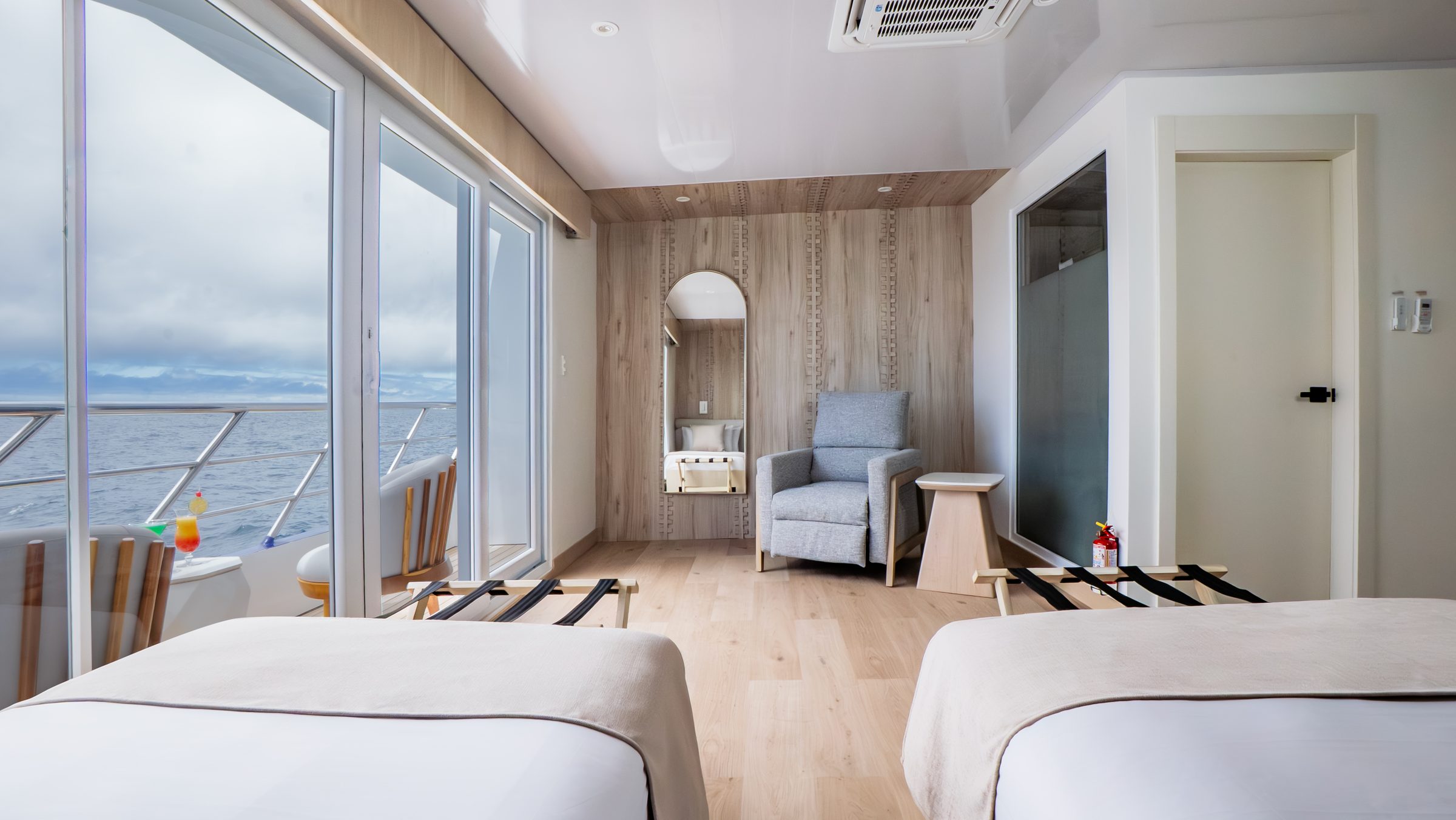
  • A cabin with two beds, luggage racks, an armchair and a tall arched mirror, with glass doors onto a balcony over the sea

Golden Suite

Golden Panoramic Suite offering a private balcony, panoramic island views, air conditioning, a social area and a private restroom with amenities.

Size
32m² (344 ft²)
Beds
Double or twin
Location
Upper Deck, Main Deck
Guests
2
  • Private balcony
  • Private bathroom
  • Seating area
  • Air conditioning

Extend your trip

Adding extra nights on land gives you more time to relax, explore and enjoy your destination at your own pace. Arrive before your cruise to settle in, recover from your journey and start your holiday feeling refreshed. Or extend your trip after disembarkation to discover more of the local sights, culture and cuisine before heading home.

  • Quito's palm-lined Plaza Grande seen from above, with colonial buildings and the twin spires of the Basílica behind

    Pre-cruise Quito Express

  • A traveller in a sun hat walks down stone steps towards the ruins and terraces of Machu Picchu

    Post-cruise Machu Picchu Highlights

Frequently Asked Questions

  • When is the best time to visit the Galápagos?

    The Galápagos is a year-round destination. December to May is the warm season, with sunny days, occasional tropical showers and calmer seas. June to November is cooler and drier, with cloudier skies, livelier seas and richer marine life. Christmas, New Year, Easter and July–August are the busiest times and sell out first, so we recommend booking 9–12 months ahead for those dates.

  • How long should my cruise be?

    Cruises run from 4 to 15 days. Four or five days covers one region of the islands well. Seven or eight days lets you reach more remote islands and see a wider range of wildlife. For the ultimate Galápagos experience, cruises of up to 15 days complete a full loop of the archipelago, visiting its central, southern, western and northern islands. We recommend at least five days if you can!

  • How do I get to the Galápagos Islands?

    Fly into Quito or Guayaquil on mainland Ecuador, then take a short domestic flight to Baltra or San Cristóbal, where your cruise begins. We recommend arriving in Ecuador at least a day before your cruise. We can book your domestic flights and time them to your ship’s departure.

  • Are there any entry fees?

    Yes. Every visitor pays a Galápagos National Park fee of US$200 per adult (US$100 for children under 12, free for under-2s), plus a US$20 Transit Control Card. Normally the park fee is paid in cash on arrival and the card is bought at Quito or Guayaquil airport before your flight. To save you the hassle, we can pre-book both for you, so they’re ready when you travel.

  • What’s included in the price?

    Cruise prices usually include your cabin, all meals and snacks on board, soft drinks and juices, and all listed excursions and activities. You’ll be accompanied by dedicated bilingual naturalist guides, certified by the Galápagos National Park. Snorkelling equipment is also provided.

  • Should I choose a cruise or a land-based trip?

    A cruise lets you reach remote islands and visitor sites that can’t be visited on day trips, and you travel between islands while you sleep. A land-based trip suits travellers who prefer staying on dry land, want more flexibility or are travelling on a tighter budget. We can also combine the two.

  • Which itinerary is best for seeing specific wildlife?

    Each itinerary visits different islands, and some species only live in certain areas. For example, waved albatrosses nest on Española, penguins and flightless cormorants are found in the west, and Genovesa is famous for red-footed boobies. Tell us what you most want to see and we’ll match you to the right route.

  • Is a Galápagos cruise suitable for children?

    Yes, all our ships welcome families. Most ships have a minimum age of 7, but a few especially family-friendly ships have no minimum age at all. We can recommend the best options and cabins for your family.

  • Can you cater for dietary requirements?

    Yes. Most ships can cater for vegetarian, vegan, gluten-free and other dietary needs, as well as allergies. Just let us know when you book and we’ll pass the details to the ship in advance.

  • Is there Wi-Fi on board?

    Some luxury ships offer free Wi-Fi, while others charge extra for it. Connection is usually via satellite and can be limited, so expect to be largely offline while at sea. Most guests find it part of the magic.

  • Can I combine my cruise with mainland Ecuador or Peru?

    Absolutely. Many guests add a few nights in the Andes, the Amazon rainforest or Quito’s historic centre, or extend to Machu Picchu in Peru. We’ll build your whole trip around your cruise dates.

  • I’m travelling solo - can I join a cruise?

    Absolutely. Many travellers cruise the Galápagos on their own. Some ships offer shared cabins with another guest of the same gender, some have single cabins with no supplement, and others charge a single supplement for a private cabin. We’ll find the best option for you.

  • Can I go scuba diving on a cruise?

    Most cruises focus on snorkelling rather than diving. Some ships offer diving as an optional extra, and there are also dedicated liveaboard dive cruises for certified divers. Let us know if diving is a priority and we’ll recommend the right ship.

  • How much luggage can I bring?

    Domestic flights to the Galápagos usually allow one checked bag of up to 23 kg and one carry-on. Soft-sided bags are easier to store on board. All luggage is checked at the airport to stop non-native plants, seeds and animals reaching the islands.

  • Will I get seasick?

    Some crossings can be choppy, especially from June to November. Catamarans and larger ships tend to be the most stable. Bring seasickness tablets or patches just in case, and let us know if you’re worried. We can suggest itineraries with shorter crossings.

  • What should I pack?

    Pack light, breathable clothing, plus a warm layer and a waterproof jacket. You’ll also want a hat, sunglasses, reef-safe sun cream, swimwear, comfortable walking shoes and sandals for wet landings. Don’t forget binoculars and a camera.

  • What currency is used, and should I bring cash?

    Ecuador uses the US dollar. Bring cash for park fees, tips and small purchases, as ATMs are limited on the islands and some places don’t accept cards.

  • Do I need travel insurance?

    Travel insurance isn’t mandatory, but we highly recommend it. Choose a policy that covers medical treatment, emergency evacuation and cancellation for your whole trip.

Scroll, pinch or double-click to zoom, or use + and −. Drag or use the arrow keys to move around.